

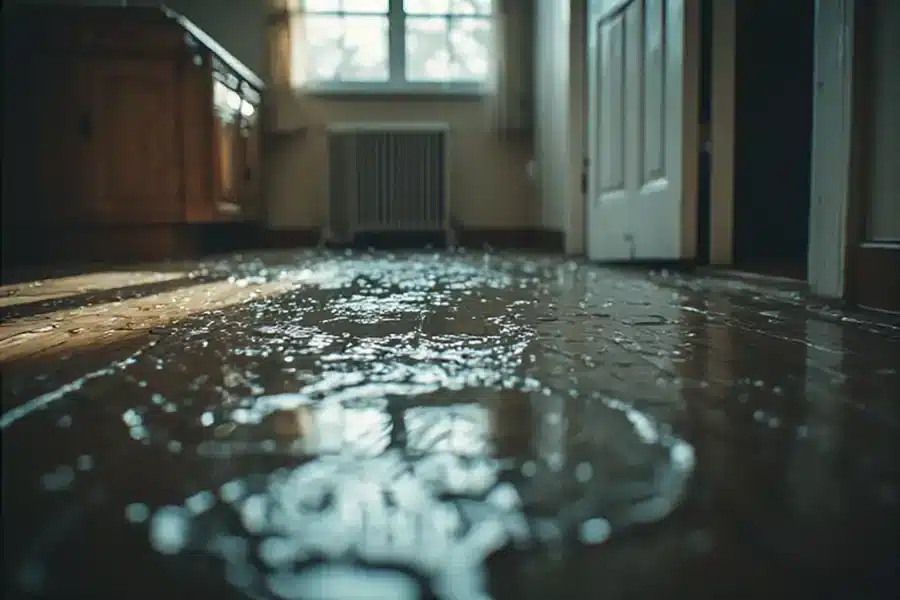
When water pools on your floor or a strange gurgle comes from the drain, panic is often followed by one critical question: is this a minor hiccup or a full-blown plumbing emergency? The answer determines whether you should call for help immediately, and making the wrong choice can be the difference between a simple fix and thousands in damages. This guide is your triage tool to act with confidence, not fear.
The single most important action you can take to prevent catastrophic damage is knowing how to shut off your home’s main water supply. According to home insurance data, water-related incidents are among the most frequent and costly claims, but shutting off the main valve stops a leak in its tracks. This guide covers the top signs of a plumbing emergency, from gushing pipes to silent threats, so you know exactly what to do next.
Your Home’s ‘Emergency Brake’: How to Find and Use Your Main Water Shut-Off Valve
When water gushes from a burst pipe or an overflowing toilet, your first move—before even calling a plumber—is to stop the damage. Every home has an ’emergency brake’ for its water system: the main water shut-off valve. Knowing how to use it is the first step in managing a crisis.
To find yours, start in the most likely places. It’s typically located where the main water pipe enters your home, often in a basement or crawl space near the front-facing wall. In homes without basements, check a utility closet, the garage, or an outside wall near your water meter. Look for a single pipe coming through the foundation or wall with a distinct valve.
You’ll likely see one of two types. A lever valve has a long, straight handle; a simple quarter-turn (so the handle is perpendicular to the pipe) will shut off the water. The other common type is a round wheel valve, which looks like a small garden hose spigot. For this one, turn the wheel clockwise (“righty-tighty”) several times until it gently stops. Don’t force it, but ensure it’s fully closed.
Confidently shutting off the main water supply in under a minute gives you crucial breathing room to assess the situation and call a professional without the sound of rushing water adding to the chaos.
Code Red Signs: Responding to Major Flooding from Burst Pipes or Backups
A sudden flood is an undeniable emergency. Whether it’s from a burst pipe gushing behind a wall or severe damage from an overflowing toilet, this is the most destructive plumbing failure you can face. The goal is no longer diagnosis; it’s immediate damage control, as water can quickly saturate drywall, warp flooring, and compromise your home’s structure.
First, determine the source. If the water is clear, you are likely dealing with a burst supply line—a common result of a frozen pipe burst risk in winter. However, if the water is murky and has a foul odor, you have a sewer backup in your basement or another low-lying drain. This is not only destructive but also a serious health hazard.
In either scenario, your response should be swift. Immediately head to your main water shut-off valve and turn it off to stop the incoming flow from a burst pipe. (Note: this will not stop a sewer backup). Your second, and most important, step is to call an emergency plumber. This is a “call now, no exceptions” situation that is far beyond a DIY fix.
Before you wade into the disaster, think about electrical safety. If standing water is near outlets, appliances, or your breaker box, do not enter the area. The risk of a life-threatening electrical shock is very real. When you call your plumber, inform them of the potential electrical hazard.
Warning Sounds: What Gurgling Drains and Toilets Are Really Saying
A strange gurgling from a drain or toilet isn’t just a quirk—it’s a cry for help. Your drain pipes need to breathe, and a gurgle is the sound of trapped air being forced through water due to a deep blockage. While an isolated clog in a sink is a nuisance, this sound often points to a much larger problem brewing out of sight.
Pay close attention to where and when you hear the gurgling. If flushing a toilet causes the nearby shower drain to bubble, or running the washing machine makes your toilet gurgle, you have the most important clue. This means the problem isn’t with one fixture; it’s a blockage in your main drain line that carries all of your home’s wastewater away. Nothing can get out, so pressure builds up and affects other fixtures.
This widespread gurgling is your final warning sign before a potential sewer backup. It’s the plumbing equivalent of seeing smoke before the fire. While you may not have water on the floor yet, a system-wide blockage is an impending emergency that requires a professional to prevent a messy and hazardous backup.
That Rotten Egg Smell: Why You Must Never Ignore a Sewer Gas Odor
Of all the warning signs your plumbing can give, a foul odor is one you must never ignore. If you notice a persistent smell of sewage or rotten eggs, it’s not just unpleasant—it’s a serious hazard signaling that sewer gas is leaking from your drainage system into your home’s air.
This gas contains fumes that are harmful to breathe and can cause nausea, headaches, or other health problems. The odor is a symptom of a critical failure, like a cracked drainpipe or a dried-out seal that is supposed to form an airtight barrier between your home and the sewer line. The dangers of a sewer gas smell make this a true plumbing emergency.
Your response must be immediate. First, ventilate the area by opening windows to let fresh air in. Second, call a licensed plumber right away. They have the tools to trace the source of the leak and repair it safely. While a loud burst pipe is an obvious disaster, a sewer gas leak is a silent threat that poses a direct risk to your well-being.
Silent Threats: How to Spot a Hidden Leak Before It’s Too Late
Not all plumbing disasters are loud. A sudden drop in water pressure across your entire home is a subtle but serious warning. If your showers, sinks, and toilets all seem weak simultaneously, it often points to a significant leak in your main water line, potentially bleeding water into your foundation or yard.
Thankfully, you have a powerful leak detection tool on your property: the water meter. To check for a hidden leak, first ensure every faucet, hose, and water-using appliance in your home is turned off. Then, go look at your water meter. Most meters have a small triangle or dial, known as a leak indicator. If that indicator is spinning, even slowly, water is flowing somewhere, confirming an active leak.
Leaks can also reveal themselves through physical damage. A new, discolored stain on a ceiling, bubbling paint on a wall, or a patch of lawn that’s suddenly soggy and greener than the rest are clear signs of a broken water main in yard or a burst pipe inside a wall. These are not cosmetic issues; they are evidence of ongoing water damage.
Whether it’s a spinning meter or a spreading stain, these silent threats demand action. An unseen leak can lead to thousands of dollars in repairs for rotted wood, collapsed drywall, and dangerous mold growth. Don’t wait for the problem to get worse; call a professional plumber to locate and fix the source before the damage becomes catastrophic.
Emergency vs. Urgent Repair: Can It Wait Until Morning?
Knowing when to call an emergency plumber can save you from both extensive water damage and expensive after-hours fees. A true plumbing emergency is any problem that poses an immediate threat to your health or property. In contrast, an urgent repair is a major inconvenience that can typically wait for normal business hours without causing a catastrophe.
Use this guide to decide if you need help now:
| EMERGENCY (Call Now) | URGENT (Call for an Appointment) | | :— | :— | | • Major flooding from a burst pipe | • A constantly running toilet | | • Sewer water backing up into drains | • A dripping faucet | | • No water at all throughout the house | • No hot water in house suddenly | | • A strong smell of sewage/rotten eggs | • A single slow or clogged drain |
Recognizing that your problem is urgent—but not an emergency—gives you peace of mind and protects your wallet. But when you are facing a catastrophic issue, every second counts.
Your 3-Step Action Plan for Any Plumbing Crisis
You now have the knowledge to distinguish a minor issue from a true emergency. Committing this simple, three-step plan to memory turns potential panic into focused action.
Your Emergency Action Plan:
- Stop the Water: Shut off the main valve if needed.
- Assess for Safety: Look for electrical hazards.
- Call for Help: Contact a licensed plumber.
With this knowledge, you can see your home’s plumbing not as a threat, but as a system you can manage. Take one final, proactive step today: find the number for a trusted 24-hour plumber and save it in your phone. You’re no longer hoping a problem won’t happen—you’re prepared for when it does.
https://spindletopplumbing.com/
Spindletop Plumbing
409-748-5186
https://facebook.com/spindletopfixit/
Google Business Listing