

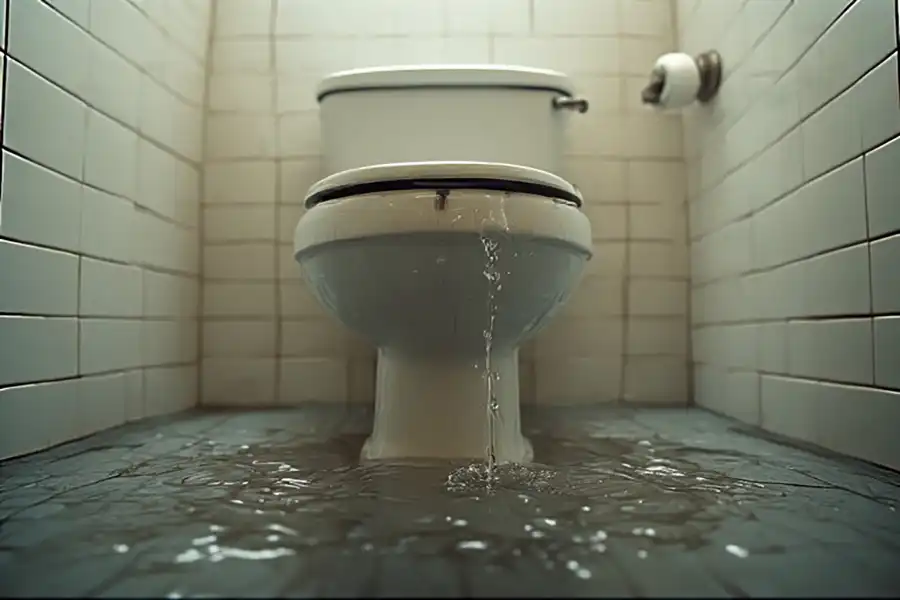
It’s 2:00 AM, and you hear your bathroom “ghost flushing” from down the hall. Lying awake, you might wonder, “why is my toilet running constantly?”—a common frustration that often translates directly into a surprisingly high city water bill by the end of the month.
Industry data reveals our Southeast Texas environment is usually to blame for these midnight leaks. Between the intense summer humidity and Jefferson County’s mineral-heavy water, hard calcium buildup rapidly degrades the rubber seals inside your tank, forcing your plumbing to work incredibly hard.
Fixing these Beaumont TX common toilet problems doesn’t require advanced tools. Consider this guide your helpful neighbor, walking you through safe troubleshooting steps to silence your bathroom and protect your wallet.
Why is My Toilet Running Constantly?
Hearing water running at 2:00 AM is a spooky, expensive Beaumont problem. If your fixture won’t stop running, picture your tank as a leaky bucket. When the plug at the bottom doesn’t seal perfectly, water steadily escapes into the bowl below.
Inside that vessel are two key parts: the flapper (the rubber plug) and the fill valve (the faucet refilling the water). Jefferson County’s mineral-heavy water often coats that flapper in calcium, which ruins the tight seal and forces the fill valve to work overtime to replace what is lost.
Before calling a professional, try this easy silent toilet leak detection test using everyday food coloring:
- Remove the heavy tank lid safely and set it aside.
- Squeeze six drops of coloring directly into the upper tank water.
- Wait twenty minutes without flushing the handle.
- Look inside the bowl—if the color seeped down, your flapper failed.
Fortunately, swapping out these worn rubber parts usually requires just a screwdriver and a standard toilet tank component replacement kit from your local hardware store. Once your tank is quietly holding water again, we can look at improving overall performance by fixing a slow flush and clearing stubborn clogs.
Fixing a Slow Flush and Clearing Stubborn Clogs
Sometimes a weak flush isn’t a pipe traffic jam; it’s a lack of water pressure. If you are researching how to fix a slow flushing toilet, the culprit is often Beaumont hard water mineral buildup rather than a clogged drain. Calcium slowly chokes the tiny holes under the bowl’s rim, making water trickle lazily instead of swirling.
When water backs up completely, however, you have a physical blockage. Choosing the right tool is crucial for clearing a stubborn toilet clog:
- Plunger: Ideal for standard paper blockages. Use a steady plunging motion to push the blockage through the pipe.
- Toilet Auger: Comparing a plunger vs toilet auger for homeowners is simple. When plungers fail, an auger uses a flexible metal cable to safely hook hard obstacles, like flushable wipes, without scratching your porcelain.
For lazy flushes without a solid clog, you must clean those blocked rim jets. Dissolve that crusty buildup by pouring warm white vinegar down the open overflow tube inside your tank, letting it sit overnight to naturally restore full flushing power.
Once your bowl empties powerfully again, take a quick glance at the bathroom floor. If you notice dampness pooling around the bottom of the fixture, it is time to transition into solving the mystery of the leaking base.
Solving the Mystery of the Leaking Base
Between the Southeast Texas humidity and chilly indoor AC, your toilet might just be “sweating.” Condensation dripping down the porcelain is one of the most frequent local toilet problems, often mistaken for a genuine plumbing failure. Before panicking, wipe the tank completely dry; if water pools at the base only immediately after a flush, you are actually dealing with a broken floor seal.
Our local clay soil expands and contracts heavily with seasonal rains, causing invisible house shifts that can easily break the hidden wax ring underneath your fixture. This thick, donut-shaped seal prevents wastewater from escaping, and ignoring a gap leads to rotted subfloors, making a leaking wax ring replacement essential for protecting your bathroom.
Fixing this gap requires unbolting the bowl, scraping off the old gooey seal, and pressing a fresh ring into place. While the fixture is lifted—especially if you are simultaneously battling local water pressure issues in Beaumont that weaken daily flushes—it is the perfect time to evaluate the unit itself. Instead of reinstalling an aging model over your fresh floor seal, evaluating a high-efficiency toilet upgrade is a smart next step.
When to Upgrade to a High-Efficiency Toilet
Since the fixture is already lifted, ask yourself if reinstalling that water-guzzling dinosaur makes sense. Beaumont residents are quickly discovering high-efficiency toilet installation benefits to combat rising utility bills. Upgrading offers a practical defense against our local plumbing stresses.
Modern models provide three distinct advantages for Southeast Texas homes:
- Cost Control: Comparing dual flush vs single flush efficiency reveals massive utility savings simply by offering a lighter half-flush for liquid waste.
- Storm Safety: Using significantly less water per flush is vital for preventing overflows during heavy Texas rain when municipal sewers get overwhelmed and back up.
- Clearing Power: If your older home suffers from weak flow, a pressure-assisted toilet uses a sealed pocket of compressed air to forcefully blast waste down the pipes.
Tackling this swap involves hauling heavy, awkward porcelain. If balancing that weight over a fragile new wax seal sounds risky, knowing your DIY limit and when to call a Beaumont plumber becomes essential.
Knowing Your DIY Limit: When to Call a Beaumont Plumber
You now understand your plumbing well enough to fix minor tank issues and confidently lower your monthly water bill. However, knowing your “Red Line”—the exact moment to stop DIY efforts—is crucial to avoid accidentally causing expensive sub-floor damage.
Stop plunging and call a professional if you spot these red flags:
- Gurgling drains or foul sewer smells.
- Water pooling around the base (let a pro handle the complex toilet flange repair steps).
- Stubborn backups, which are classic signs of sewer line root intrusion in older Beaumont neighborhoods.
When these serious issues strike, realistic emergency plumbing repair costs Beaumont residents face generally range from $150 to $400. You no longer have to guess if a problem is a simple fix or a major threat; when you reach that red line, call Spindletop Plumbing to protect your home safely and quickly.
Spindletop Plumbing
409-748-5186
https://facebook.com/spindletopfixit/
Google Business Listing