

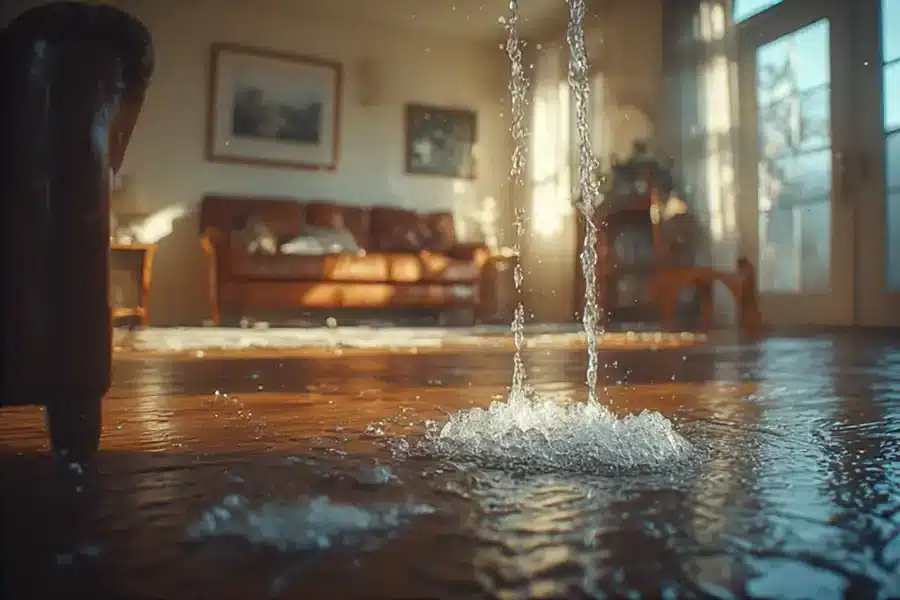
In Beaumont, opening a surprisingly high utility statement usually triggers a frantic search for running toilets or dripping faucets. However, high water bill causes in Beaumont homes are often silent and invisible. Industry data suggests that a single pinhole leak, barely the size of a needle tip, can waste nearly 10,000 gallons of water in a single month. This silent flow drains your wallet long before you notice a wet spot on the carpet or a drop in water pressure.
The culprit often lies in our region’s heavy “gumbo” clay soil. This dense earth expands significantly when wet and shrinks during dry spells, acting like a slow-motion vice grip on your home’s foundation and plumbing lines. Addressing this environmental pressure is crucial for handling Water Leak Detection and Repairs In Beaumont TX effectively before a minor drip becomes a structural emergency.
Is Your Water Meter Racing? How to Spot a Silent Leak Before It Drains Your Bank Account
If your utility bill jumped this month without a house full of guests, knowing how to check water meter for leaks is your first line of defense. Located near the street in a utility box, this device acts like a heartbeat monitor for your plumbing system. You can perform a simple “isolation test” to determine if water is escaping where it shouldn’t:
- Turn off every faucet and water-using appliance inside and outside the home.
- Open your outdoor water meter lid and identify the “leak indicator,” usually a small red triangle or silver gear.
- Watch the indicator for two minutes; if it moves at all while everything is off, you have a leak.
- Close your home’s main interior shut-off valve and check the meter again; if movement stops, the leak is inside, but if it continues, the breach is likely in the underground service line.
When the leak is traced indoors, the most notorious culprit is often the toilet. You might hear it refill spontaneously—a phenomenon called “ghost flushing”—or simply notice the tank takes too long to fill. This typically indicates a worn-out rubber flapper, which allows a silent stream of water to escape into the bowl. While it seems minor, a running toilet is one of the leading high water bill causes in Beaumont homes, capable of wasting thousands of gallons monthly.
However, if your fixtures are secure and no taps are dripping, that spinning meter suggests a more serious issue beneath your floorboards. Professional plumbing leak detection becomes essential when the water loss is invisible, as the source is often a pipe compromised by environmental factors.
The Beaumont Gumbo Factor: Why Our Shifting Soil Causes Slab Leaks and Foundation Damage
Beneath the concrete of nearly every home in our area lies a thick layer of expansive clay, affectionately known by locals as “gumbo.” Unlike stable bedrock, this soil is highly reactive to our region’s intense weather cycles, acting like a giant sponge that swells significantly when saturated by heavy rains and shrinks rapidly during the intense summer heat. This geological volatility means your house is technically always moving, shifting slightly up or down depending on the season’s moisture levels.
This constant heaving and settling creates a physical tug-of-war with your home’s rigid plumbing system. While your foundation is designed to “float” on this shifting terrain to some degree, the copper or PVC pipes buried underneath are far less forgiving. Over time, the expansive clay soil impact on Beaumont plumbing generates immense pressure at the points where lines pass through the concrete, eventually snapping connections or causing friction that wears holes in the pipe walls.
Identifying these subterranean breaches requires paying close attention to sensory clues inside the house rather than looking for puddles outside. You might discover subtle slab leak symptoms in Texas foundation inspections often miss, such as a localized warm spot on your kitchen tile where a hot water line has failed or the sudden appearance of damp carpet pads in a hallway. In quiet moments, you may even hear the faint sound of rushing water echoing through the walls, despite every faucet being tightly closed.
Ignoring these warning signs allows water to erode the soil supporting your home’s weight, leading to structural cracks that cost far more to fix than the plumbing itself. Securing professional Water Leak Detection and Repairs In Beaumont TX is the only way to pinpoint the exact location of the break without destroying your flooring blindly.
Hidden Dangers After the Storm: Finding Wall Leaks and Preventing Mold Growth in Southeast Texas
While shifting soil attacks your home from below, our region’s notorious thunderstorms often expose vulnerabilities in your walls. It can be difficult to distinguish between rain driven through a window seal and a pressurized pipe failure, but the evidence usually surfaces in the paint. If you notice wallpaper peeling or paint bubbling like a blister, water is trapped behind the drywall. These signs of hidden wall leaks after storms indicate that moisture is wicking through the porous sheetrock, creating a “sponge effect” that compromises the structure even if you don’t see a steady drip on the floor.
Time is your absolute enemy once moisture enters the home, especially given our naturally high humidity. Mold spores only need about 24 to 48 hours to colonize a damp surface, meaning a delay in identifying a wet spot can turn a minor plumbing fix into a major health hazard. Preventing mold growth from plumbing leaks requires immediate airflow and professional containment, as a hidden pipe leak provides a continuous water source that allows fungus to spread rapidly behind cabinets and baseboards long before you smell it.
After a heavy downpour or a sudden drop in water pressure, take a flashlight and briefly inspect these high-risk zones for discoloration or softness:
- Ceiling corners directly below second-story bathrooms
- Baseboards along exterior walls where pipes may run
- The cabinet wall behind kitchen sinks
If you find a soft spot, calling for emergency plumbing services in Southeast Texas is vital to stop the damage. Fortunately, we no longer need to smash holes in your walls just to verify a suspicion; modern tools allow us to see right through the drywall.
From Ultrasound to Infrared: How Modern Leak Detection Finds Pipes Without Tearing Up Your Tile
Gone are the days when finding a leak meant jackhammering random holes in your living room floor. Today, we treat your home like a patient, using electronic ultrasonic leak detection equipment to diagnose the problem before making a single cut. This technology works like a high-powered stethoscope, amplifying the distinct frequency of pressurized water escaping a pipe—a sound often described as a faint hiss or whoosh. Even through thick Beaumont slab foundations, these sensitive microphones allow us to pinpoint the exact location of the breach, saving your expensive tile and significantly lowering renovation costs.
While acoustic tools listen for the leak, infrared technology looks for the temperature trail it leaves behind. A hot water slab leak, for instance, will create a glowing heat signature on a scanner long before the floor feels warm to your bare feet. The distinction between professional thermal imaging vs moisture meters is crucial; while a meter only confirms a specific spot is wet, a thermal camera reveals the path of the water, showing the full extent of the issue behind the drywall without peeling back paint.
Choosing non-invasive vs traditional pipe repair methods effectively minimizes the chaos of plumbing repairs by eliminating the “guess-and-check” digging that ruins flooring. We combine these technologies to create a precise map of the problem:
- Acoustic Detection: Listens for the vibration of escaping water to pinpoint the exact source (the hole).
- Thermal Imaging: Visualizes temperature variances to map the spread of moisture (the damage).
Once we locate the general area of the leak, we must confirm the system’s overall integrity using a more robust diagnostic tool known as a hydrostatic test.
What Is a Hydrostatic Pressure Test and Why Does Your Beaumont Home Need One?
While electronic tools successfully locate active supply leaks, checking your sewer system requires a different approach to ensure it isn’t compromising your foundation. A hydrostatic pressure test for residential plumbing acts like a stress test for your home’s drain lines. We insert an inflatable test ball into the main cleanout to block the flow, then fill the pipes with water up to slab level. Just as a submerged tire reveals punctures through bubbles, this pressure forces water to find any cracks caused by our shifting Beaumont soil.
Monitoring the water level creates an immediate verdict on your plumbing’s health. During a 20-minute observation, the water column must remain perfectly steady; even a minor drop proves water is escaping into the ground beneath your house. Although this diagnostic adds to the cost of professional leak inspection services, the clarity is essential. A “pass” confirms your system is sealed, while a “fail” diagnoses a structural breach rather than a simple clog.
Smart buyers request this specific diagnostic when purchasing older properties in Southeast Texas, as standard home inspections rarely look deep enough to catch underground drainage failures. Investing in this level of plumbing leak detection prevents you from accidentally inheriting a foundation disaster. Once a test confirms a leak exists, you must then choose between excavating the yard or opting for modern, trenchless rehabilitation.
Trenchless vs. Traditional: Choosing the Right Repair Method for Your Yard and Budget
Discovering a leak under your lawn or driveway used to mean bringing in a backhoe and destroying your landscaping. For decades, traditional excavation was the only way to reach damaged pipes, leaving homeowners with a fixed sewer line but a ruined yard. Fortunately, modern technology now offers a less destructive alternative known as “trenchless” repair, which treats the problem from the inside out rather than digging down to it.
This process often involves Cured-In-Place Pipe (CIPP) technology. Imagine inserting a flexible, resin-coated sleeve into your existing damaged pipe, then inflating it until it hardens against the inner walls. This creates a brand-new, seamless pipe within the old shell that is immune to root intrusion and corrosion. Trenchless pipe lining for sewer lines is particularly effective in Beaumont because it strengthens the system against our shifting clay soil without disturbing the ground above.
Deciding between these approaches depends on the specific condition of your plumbing. While lining is generally faster, comparing non-invasive vs traditional pipe repair methods reveals distinct trade-offs:
- Trenchless Lining: Preserves driveways and gardens, offers a lifespan of up to 50 years, but cannot fix pipes that have completely collapsed or lost their proper slope.
- Traditional Excavation: Essential for replacing severely crushed lines, usually cheaper upfront for very short runs, but requires costly landscape restoration afterward.
Choosing the right path requires an honest assessment from a specialist familiar with Southeast Texas infrastructure. Expert Water Leak Detection and Repairs In Beaumont TX will always verify if your pipe is a candidate for lining before recommending a shovel. Once you have a repair plan and a quote in hand, the next logical step is determining who pays for it—you or your insurance provider.
Does Homeowners Insurance Cover Slab Leak Repair? Managing Costs and Finding Local Help
Facing a plumbing diagnosis often leads to immediate worry about the bill. The answer to “does homeowners insurance cover slab leak repair” is rarely a simple yes or no; typically, standard policies cover the cost of accessing the leak—breaking through the concrete and repairing the damage caused by water—but exclude the cost of the physical pipe repair itself. Since the excavation usually represents the bulk of the expense, filing a claim can still be financially vital.
Navigating these conversations requires specific vocabulary. To ensure you don’t leave money on the table, ask your claims adjuster these three specific questions:
- Does my policy explicitly cover “tear-out” or “access” to the source of the leak?
- Is there coverage for cosmetic restoration if the repair ruins matching tile or hardwood?
- Does the coverage extend to secondary water damage mitigation, such as drying out wet drywall?
Securing funding is only half the battle; you also need a team capable of executing the work safely. In Beaumont, verifying that your plumber holds a valid state license and liability insurance is non-negotiable, as unlicensed work can void your insurance claim entirely. While the cost of professional leak inspection services generally falls between $300 and $500, this fee is a small price for precise location data. Partnering with a trusted local provider like Spindletop Plumbing guarantees that your home is treated with respect from detection to restoration.
Protecting Your Beaumont Investment: Your 4-Step Action Plan for a Leak-Free Home
You no longer have to view a rising water bill as a mystery; you now recognize it as a signal to act before our local gumbo soil causes lasting damage. Understanding the basics of Water Leak Detection and Repairs In Beaumont TX turns a potential crisis into a manageable situation, protecting your home’s foundation and your wallet.
Don’t wait for a soggy carpet to start your prevention plan. Secure your home against future issues with these immediate steps:
- Locate and test your main water shut-off valve today.
- Monitor your water meter for movement when no water is running.
- Implement a seasonal foundation watering schedule to stabilize the soil.
- Save the number for trusted emergency plumbing services in Southeast Texas.
Spindletop Plumbing
409-748-5186
https://facebook.com/spindletopfixit/
Google Business Listing